

A slow-draining sink is one of those little annoyances that can quickly escalate into a real headache. But before you start picturing expensive call-out fees, remember that most blockages are surprisingly easy to fix yourself. Often, the simplest, oldest tricks in the book are all you need to get things flowing again.
Your First Moves Against a Blocked Sink
The moment you see that water refusing to go down, the clock is ticking. What starts as a simple build-up of grease, food scraps, or soap scum can become a stubborn, compacted mess if left too long. Taking swift, simple action is your best bet.
Before you even think about tools, it helps to diagnose what's going on under the surface. This quick checklist can point you in the right direction.
Quick Blockage Assessment Checklist
Use this table to quickly identify the likely cause of your blockage and decide on the best initial approach.
| Symptom | Likely Cause | Recommended First Action |
|---|---|---|
| Water drains very slowly, gurgles | Minor build-up of grease/soap scum | Pour boiling water down the drain |
| Standing water in sink, no drainage | Compacted food, hair, or small object | Use a plunger |
| Foul odour coming from the drain | Decomposing organic matter | Boiling water, then enzymatic cleaner |
Once you have an idea of the culprit, you can get to work with a targeted method that's more likely to succeed.
Start with Boiling Water
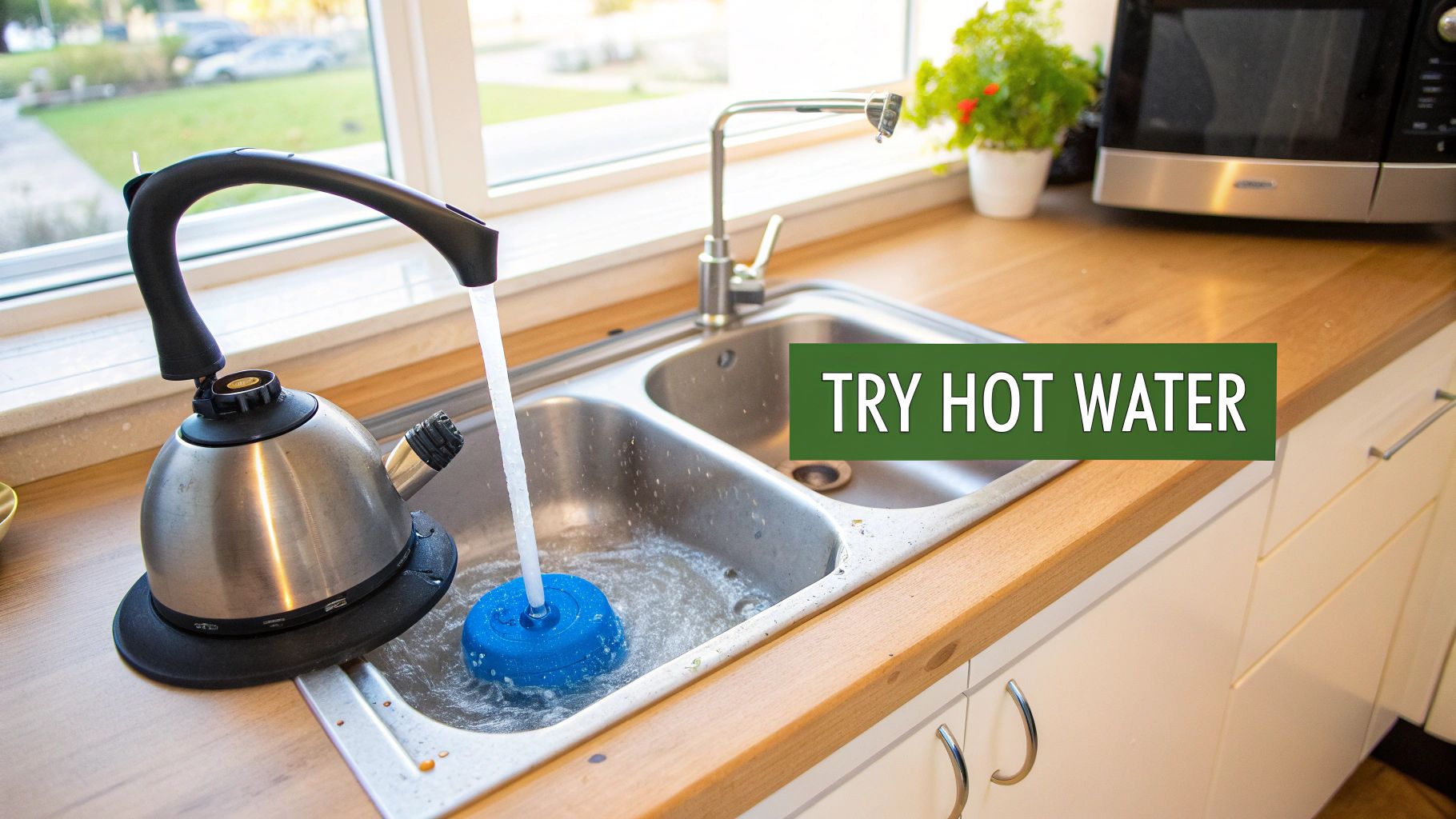
Believe it or not, a kettle full of boiling water is one of the most effective tools for a clogged kitchen sink. The primary villain here is usually fat and grease from cooking, which congeals and hardens on the inside of cool pipes.
Pouring a full kettle of freshly boiled water directly down the plughole can literally melt the problem away. It’s free, it’s fast, and it’s chemical-free. If the water starts to go down, even if it's slow at first, repeat the process a couple more times to really flush everything through.
A word of caution: if you know you have older, fragile PVC pipes, you might want to skip this one. The intense heat can sometimes soften the pipe joints.
Mastering the Plunger Technique
If hot water didn’t cut it, it’s time for the plunger. A lot of people just sort of flap it over the drain, which does very little. The real power of a plunger comes from using water to create a powerful pressure wave that blasts the blockage loose.
Here’s how to do it properly:
- Get a Good Seal: First, run a few inches of water into the sink—just enough to completely cover the rubber cup of the plunger. Without this water, you’re just pushing air, which is far less effective.
- Seal All Escape Routes: If you’re working on a double kitchen sink, stuff a wet cloth firmly into the second drain. On a bathroom sink, block the overflow hole near the top of the basin. This ensures all the pressure you create is forced down towards the clog.
- Plunge with Purpose: Place the plunger over the drain to create a tight seal and then pump it vigorously with sharp, forceful thrusts for at least 20 seconds. You're trying to create a back-and-forth hydraulic shock.
Industry professionals reckon that a well-used plunger can clear up to 80% of simple blockages. It’s incredibly effective on the hair and food debris that cause an estimated 70% of UK household clogs. If that doesn’t shift it, grabbing a drain snake from Burnt Oak's plumbing aisle is a logical next step.
Pro Tip: The tell-tale sign of success is a satisfying gurgle as the blockage finally gives way and the water rushes down. Once it's clear, run the hot tap for a couple of minutes to wash away any lingering debris.
Getting familiar with your sink's setup can also be a massive help. Our guide on how to install a bathroom sink offers some great insights into how the components fit together.
What to Pour Down the Plughole (and What to Avoid)
When a good plunging session just doesn't do the trick, it’s tempting to reach for a bottle to pour down the drain. The shop shelves are lined with options, but they boil down to two distinct approaches: gentle, DIY concoctions and powerful, purpose-built chemical unblockers.
Knowing the difference is key. Getting it wrong doesn't just mean the clog stays put; you could end up with damaged pipes or, worse, a nasty chemical burn. Let's walk through the options so you can make a smart, safe choice for the specific blockage you’re dealing with.
The Old-School Bicarbonate of Soda and Vinegar Trick
Before you go for the heavy-duty stuff, give this classic a try. The combination of bicarbonate of soda and white vinegar is surprisingly effective, especially on the greasy, soapy gunk that builds up over time. It’s much kinder to your pipes and the environment, making it a brilliant first attempt for slow-draining sinks.
It couldn't be simpler:
- First, boil the kettle and pour the hot water straight down the drain. This helps warm things up and melt any initial greasy residue.
- Next, tip about half a cup of bicarbonate of soda directly into the plughole.
- Follow it up with the same amount of white vinegar. You’ll hear it fizz and bubble immediately – that’s the reaction getting to work.
- Pop the plug in to keep all that fizzy action down in the pipes, and just leave it for at least 20-30 minutes.
- Finish by flushing it all away with another kettle of boiling water.
This is my go-to for routine maintenance in the kitchen, where fat and oil from cooking are the usual suspects. It won't blast through a solid, compacted blockage, but it's fantastic for keeping things flowing.
Choosing the Right Chemical Drain Cleaner
If the natural approach fails, it’s time to look at chemical solutions. These products are incredibly effective but demand respect and careful handling. They generally fall into two categories: enzymatic or caustic.
Enzymatic cleaners are the gentler option. They use natural enzymes and bacteria to literally eat away at organic waste like hair, food, and grease. They're a much safer bet for older homes with delicate pipework and are great for regular upkeep. The trade-off? They’re slow. You might need to leave one overnight to see results.
Caustic cleaners are the powerhouse solution. These contain potent chemicals like sodium hydroxide that create a powerful heat reaction to dissolve clogs fast. For professionals and DIYers sourcing supplies from places like Burnt Oak Builders Merchants, a quality caustic cleaner is often the answer. A typical application involves pouring 250ml of gel, waiting 30 minutes (or longer for stubborn clogs), and flushing with hot water to clear 60-70% of organic blockages.
But this power comes with a serious warning. It’s estimated that around 15% of UK plumbing emergencies are caused by the misuse of these products. Getting a wider view of sewerage industry trends really puts the scale of the problem into perspective.
A Word of Warning: Never, ever mix different chemical drain cleaners. The chemical reaction can create toxic gas. If one product doesn’t work, flush the drain with loads of cold water before you even think about trying something else.
Playing it Safe with Chemicals
Whenever you handle a chemical unblocker, safety has to be your number one priority. These are not just strong cleaners; they can cause severe burns and damage surfaces if you’re not careful. Always read and follow the manufacturer’s instructions perfectly.
Here are the absolute essentials:
- Gear Up: Wear heavy-duty rubber gloves and proper safety goggles before you even crack the seal on the bottle.
- Get Some Air: Open a window or door. The fumes can be surprisingly strong, so good ventilation is a must.
- Pour with Care: Tip the liquid slowly and steadily, aiming directly for the plughole to prevent any splashing.
- Lock It Down: Once you're done, store the bottle somewhere safe, well out of the reach of children and pets.
By picking the right product for the job and handling it with the caution it requires, you can clear that stubborn clog without causing a much bigger headache for yourself or your plumbing.
Using Mechanical Tools for Stubborn Clogs
When you’ve tried boiling water, the plunger, and even chemicals without any luck, it’s a clear sign you’re up against something more serious. This is where you need to get a bit more hands-on. Mechanical tools are your next port of call, giving you a direct, physical way to break up or pull out whatever is causing the jam.
For those deep, stubborn clogs, your best friend is the drain auger, which you might know as a plumber’s snake. It's the go-to tool for reaching blockages that are way down the pipe, far beyond where other methods can touch. It’s essentially a long, flexible metal cable with a handle you crank to work it through the pipes.
Getting to Grips with a Handheld Drain Auger
Using a drain auger might look a bit daunting, but it's actually quite a straightforward process. The trick is to be patient and methodical. Before you start, lay down some old towels and stick a bucket under the sink – it can get messy.
To get started, you'll need clear access to the pipe. I usually find it’s best to remove the P-trap (that U-shaped pipe) under the sink. This gives you a straight shot into the waste pipe that goes into the wall, which is exactly where the most frustrating clogs love to hide.
With the trap out of the way, you can start feeding the auger in.
- Feed the cable in: Gently push the flexible cable into the open pipe. Don’t force it. Just keep going until you feel it stop against something solid. That’s your clog.
- Lock and turn: Now, tighten the thumbscrew on the auger to lock the cable. Begin slowly turning the crank handle clockwise, applying a little bit of forward pressure as you go. You're aiming to drive the corkscrew tip right into the blockage.
- Break it up or pull it out: You might feel the clog suddenly give way and break apart. Other times, the auger tip will hook onto it. If that happens, you can gently pull the whole mess back out by retracting the cable.
- Flush everything through: Once you’re confident the blockage is gone, pull the cable out, put the P-trap back on, and run the hot tap for a few minutes. This will flush out any leftover bits and pieces.
The flowchart below shows how you might progress from a simple home remedy to more powerful options when trying to clear a sink.
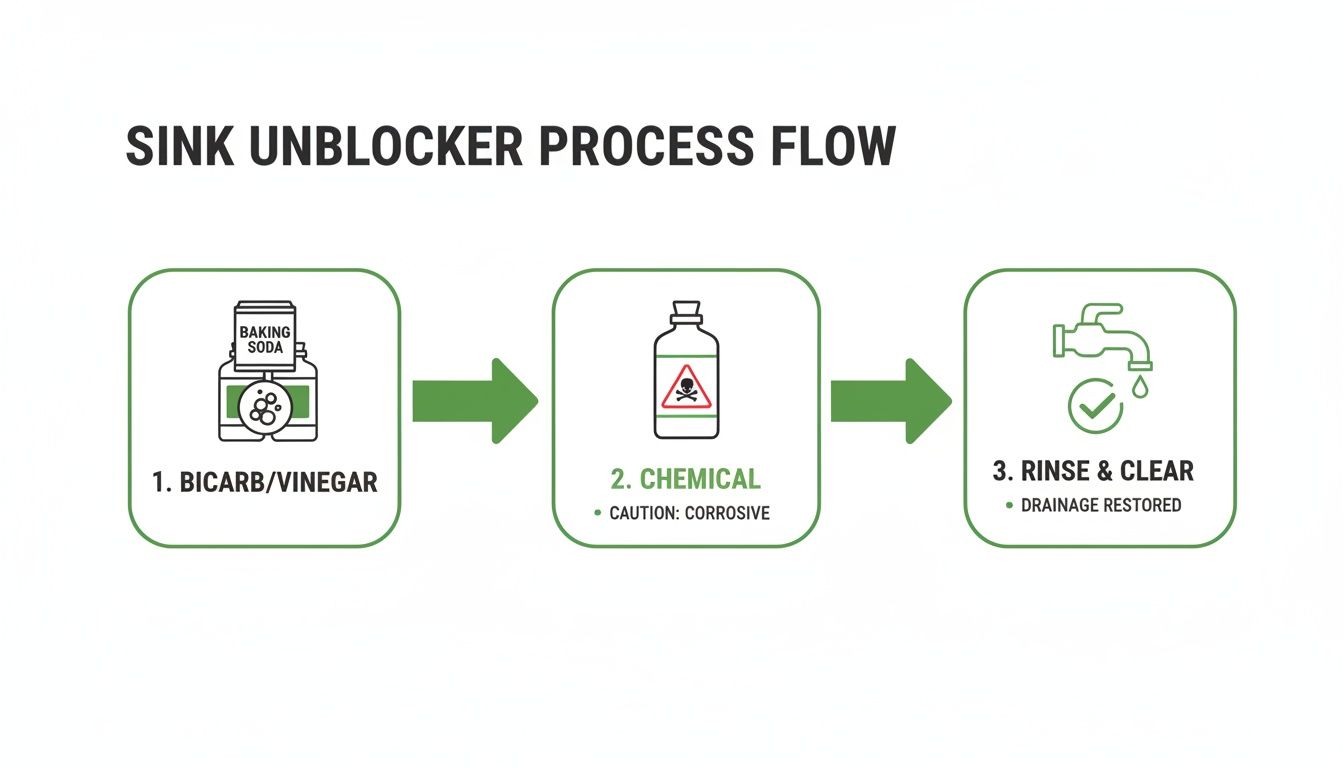
As you can see, it’s a logical progression, starting with the mildest approach and only moving on to stronger methods if needed.
Manually Cleaning the P-Trap
Sometimes, the entire problem is sitting right there in the P-trap. That bend in the pipe is designed to hold a small amount of water, which stops nasty sewer gases from coming up into your kitchen or bathroom. The downside is that its U-shape is the perfect place for hair, soap scum, and old food to build up.
My Pro Tip: Honestly, cleaning the P-trap is often all it takes to fix a slow-draining sink. It's a bit of a mucky job, but it’s fast and incredibly effective. Just make sure you have that bucket directly underneath before you unscrew a thing.
Most modern PVC traps have slip nuts that you can loosen by hand, so you might not even need a wrench. Just undo the two nuts connecting the trap to the sink and the wall pipe. Be prepared for water and gunk to spill out into your bucket.
With the trap off, you can give it a proper clean in another sink or with a garden hose outside. A bottle brush is great for scrubbing out all the grime from the inside before you put it back. If you notice the trap is old or cracked while you have it off, it's a good time to swap it for a new one, like a reliable McAlpine A10 bottle trap with a 75mm seal, which will save you from dealing with leaks later on. Find them here: https://www.burntoaktimber.com/products/mcalpine-a10-bottle-trap-with-75mm-seal-1-1-4.
Comparing Your Drain Unblocking Options
To help you decide on the best approach for your specific clog, here's a quick comparison of the common methods. This should help you balance how effective each one is against the cost and safety considerations.
| Method | Best For | Pros | Cons |
|---|---|---|---|
| Boiling Water | Minor grease, soap scum | Free, easy, and fast | Can damage PVC pipes; ineffective on solid clogs |
| Bicarb & Vinegar | Mild organic blockages | Eco-friendly and gentle on pipes | Not powerful enough for serious obstructions |
| Plunger | Standing water, localised clogs | Reusable and effective for creating pressure | Can be messy; doesn't remove the clog, just moves it |
| Chemical Cleaners | Hair, soap, and grease buildup | Very effective on specific clog types | Harsh chemicals can damage pipes and are bad for the environment |
| Drain Auger/Snake | Deep, solid blockages (hair, food) | Physically removes the obstruction | Requires some manual effort and can be messy |
| Manual P-Trap Clean | Clogs located directly in the U-bend | Often a guaranteed fix for sink clogs | Messy job; requires basic disassembly |
Choosing the right tool for the job is half the battle won. Start with the simplest, least-invasive method and only escalate if you have to.
When Mechanical Tools Aren't Cutting It
In the UK, mechanical methods are set to make up a huge chunk of the drain cleaning market, with a projected share of 68% by 2025. For good reason, too. A simple handheld auger, which you can pick up for £15-£30 at most builders' merchants, can sort out 90% of deep clogs without any harsh chemicals. This is much kinder to the PVC pipes found in over 70% of UK homes.
Even so, there are times when a drain auger just won't be enough. The blockage might be rock solid, too far down the line for a handheld tool to reach, or it could be a sign of a bigger problem, like tree roots getting into the pipes.
For these nightmare clogs that just won’t budge, you’ll likely need professional help. Plumbers have access to powerful tools, including advanced hydro jetting services. These systems use incredibly high-pressure water to blast through almost any obstruction, scouring the pipe walls clean in the process.
Keeping Your Drains Clear with Simple Habits
Let’s be honest, the best way to deal with a blocked sink is to stop it from happening in the first place. While knowing how to clear a stubborn clog is a handy skill, focusing on prevention will save you a world of effort, mess, and money down the line. It's not about complex plumbing knowledge, just a few smart habits woven into your daily routine.
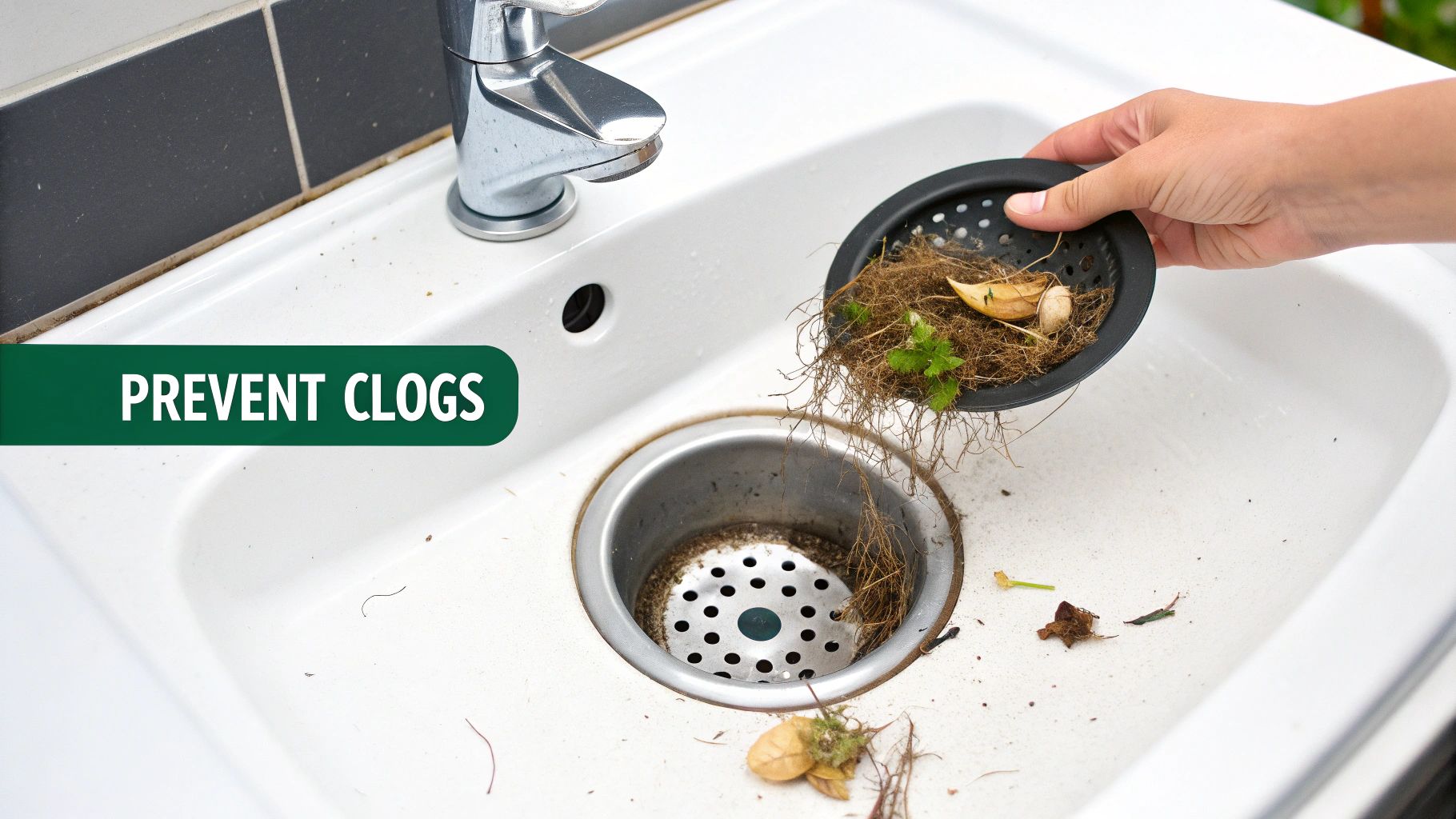
Think of it as proactive plumbing care. These small, consistent actions are what make the difference between a free-flowing drain and one that’s always on the brink of backing up.
The Golden Rule: Never Pour Fats, Oils, or Grease Down the Sink
If there's one thing to take away from this guide, it's this. This is, without a doubt, the number one cause of kitchen sink blockages.
When you pour hot cooking fat, oil, or grease (often called FOG) down the drain, it might look like a harmless liquid. The problem is, as it travels down into the colder pipes, it rapidly cools, solidifies, and clings to the pipe walls.
Over time, this sticky layer acts like flypaper, grabbing food particles and other bits of debris. Before you know it, you’ve got a solid, stubborn mass that’s a nightmare to shift. You might have heard of 'fatbergs' in main sewer lines – this is just a miniature version happening right under your sink.
Instead, make this your new habit:
- Let it cool: Allow the grease or oil to cool down in the pan.
- Contain it: Pour it into an old jar or a sealable container you were going to throw away anyway.
- Bin it: Once the container is full, just pop it in your general waste bin. For those smaller amounts, a quick wipe of the pan with a paper towel before washing does the trick.
The Power of a Simple Drain Guard
A drain guard, or sink strainer, is probably the cheapest and most effective plumbing tool you'll ever own. It's just a small, perforated disc of metal or silicone that sits over your plughole, but its impact is huge. Its sole job is to catch the stuff that has no business being in your pipes.
In the kitchen, it's your first line of defence against rice, coffee grounds, and bits of vegetable peel. In the bathroom, it’s an absolute hero for catching hair, the main culprit for blockages there. It's a simple physical barrier that makes all the difference.
Make a habit of emptying the strainer into the bin after washing up or every couple of days. This tiny action, which takes less than ten seconds, prevents the vast majority of debris from ever starting its journey into your plumbing.
Establish a Simple Maintenance Schedule
A little consistent care goes a long way and is far better than reacting to a plumbing crisis. You don’t need to spend hours on it; just a few minutes a week and a slightly deeper clean once a month will keep your drains in top shape.
Weekly Tasks (2 Minutes)
- Boiling Water Flush: Once a week, boil a full kettle and pour it straight down the kitchen sink. This blast of hot water helps melt away any fresh, greasy build-up before it can harden and grab onto other debris.
- Clear the Stopper: In the bathroom, just pull out the pop-up stopper and clear away any trapped hair. Simple as that.
Monthly Tasks (5 Minutes)
- Natural Cleanse: For a cheap and effective clean, pour half a cup of bicarbonate of soda down each drain, followed immediately by half a cup of white vinegar. Let it all fizz and work its magic for about 30 minutes, then flush it all through with plenty of hot water. This little trick is brilliant for breaking down soap scum and getting rid of any odours.
This straightforward routine costs next to nothing but is one of the most powerful things you can do to keep your sinks flowing freely, ensuring small issues never become a full-blown blockage.
Knowing When It Is Time to Call a Plumber
There’s a real satisfaction in sorting out a blocked sink on your own, but it’s just as important to know when to admit defeat. Some plumbing jobs are much bigger than a simple clog, and trying to force a DIY fix can quickly turn a small headache into an expensive disaster. Recognising the warning signs is a key skill for any homeowner.
Trying to muscle your way through a serious blockage can lead to cracked pipes, water damage, or pressure problems that mess with your entire home's drainage. The trick is knowing when to put down the tools and pick up the phone.
Persistent and Recurring Blockages
Have you found yourself clearing the same sink three times this month? A blockage that stubbornly returns, no matter how much you plunge or snake it, is a massive red flag. This isn't just a run of bad luck; it’s a sign of a deeper issue.
A recurring clog usually means you're only tackling the tip of the iceberg. There’s likely a much larger obstruction further down the line—think years of hardened grease and scale, or even tree roots starting to invade your main drain. Your temporary fixes just won't cut it.
A professional plumber has tools we don't, like CCTV drain cameras that can get a proper look deep inside your pipes. This takes all the guesswork out of it, showing them exactly where the problem is and what it will take to fix it for good.
Multiple Drains Are Backing Up
This is one of the most serious signs. If your kitchen sink is blocked and you suddenly notice the downstairs loo is gurgling or the shower is draining like molasses, you're almost certainly facing a blockage in your main sewer line.
This is absolutely not a DIY job. A main line clog brings your home's entire drainage system to a standstill. It takes specialised, powerful equipment to clear it safely, and trying to sort it with household tools is pointless and risky.
Keep an eye out for these tell-tale signs:
- Widespread slow drains: Sinks, showers, and toilets all start draining sluggishly around the same time.
- Water popping up in strange places: Flushing a toilet causes water to bubble up in the shower drain, for example.
- Foul odours from multiple drains: A strong sewer gas smell is coming from more than one plughole.
Strong and Unpleasant Odours
A nasty, persistent smell of sewage coming from your drains that cleaning won't shift is a serious warning. A bit of a smell from trapped food is one thing, but a constant sewer gas odour points to a problem with your drain ventilation or a severe blockage allowing gases to escape back into your house. If the smell is widespread and just won't go away, it's time for an expert. For a deeper dive, you can explore this resource on understanding clogged sink drains and professional help.
You Suspect a Leak or Damaged Pipe
Sometimes, the blockage is just a symptom of a bigger structural problem. If you spot damp patches on walls or ceilings near the sink, or find puddles of water underneath that aren't from you cleaning the P-trap, you could have a leak.
Trying to force a clog through a pipe that’s already leaking or damaged is asking for trouble. If you see signs of water damage, you need to investigate properly. Our guide on how to fix leaking pipes has some great info on what to look for. Ultimately, calling a professional ensures the entire problem is diagnosed and fixed correctly, protecting your home from much worse damage.
Got Questions? We've Got Answers
Even with the best instructions, you can still run into a few head-scratchers when tackling a blocked sink. Getting the right advice can be the difference between a five-minute fix and a much bigger, messier problem. Here are some of the most common questions we get asked, with practical, no-nonsense answers to see you through.
Can I Just Pour Any Chemical Unblocker Down My Pipes?
This is a great question, and the answer is a hard no. Grabbing just any old bottle of chemical cleaner off the shelf is a risky move, as the wrong type can do some serious, lasting damage to your plumbing.
Heavy-duty, caustic-based cleaners are certainly powerful, but they are also incredibly aggressive. They can be particularly harsh on older metal pipes or certain plastics, and with repeated use, they can eat away at the metal or weaken PVC pipe joints, leading to leaks down the line. You absolutely must read the label to check if it's safe for your specific type of pipework.
If you’re not sure what your pipes are made of, an enzymatic cleaner is your safest bet. These work differently, using natural bacteria to slowly eat away at organic gunk like grease and hair. They might take a bit longer to get the job done, but they're gentle on all types of pipes and won't harm your septic system. When in doubt, it’s always better to stick with a natural method or a tool to avoid a costly mistake.
What if I’ve Tried Everything and My Sink is Still Blocked?
It’s incredibly frustrating. You’ve plunged, you've tried different solutions, you’ve even wrestled with a drain snake, and the water is still just sitting there. If you've thrown all the usual DIY tricks at it and got nowhere, it's time to stop.
Trying to force the issue at this stage is more likely to damage your pipes than clear the clog. The problem is probably one of two things: either the blockage is located deep within your drainage system, far beyond what a standard handheld auger can reach, or it's become a solid, compacted mass that simple tools just can't break apart. It could even be a sign of a more serious issue in the main drain line outside your property.
This is the point where you call in a professional plumber. They have the proper gear for these tough jobs, like long, motorised augers and even tiny CCTV cameras they can send down the drain. This kit lets them find the exact location and cause of the blockage and clear it out safely without causing any more problems.
How Often Should I Clean My Drains to Stop Clogs Happening?
A bit of prevention really does go a long way with plumbing. Keeping on top of your drains with a simple routine is the best way to avoid the headache of a full-blown blockage in the first place.
Here’s a straightforward maintenance schedule that actually works:
- Weekly: Get into the habit of pouring a kettle of boiling water down the kitchen sink. This simple flush helps melt away any fresh grease before it has a chance to build up and solidify. For the bathroom sink, pull out the pop-up stopper and clear away any trapped hair and gunk.
- Monthly: Give your drains a proper clean-out. A simple mix of bicarbonate of soda and vinegar, flushed with hot water, works wonders for breaking down soap scum and getting rid of smells. Alternatively, a monthly dose of an enzymatic cleaner will keep everything flowing nicely.
Our Top Tip: The single best thing you can do is pop a drain strainer in every sink. It’s a cheap and simple little gadget that physically stops food scraps, hair, and other debris from ever going down the drain.
Is a Drain Auger the Same Thing as a Drain Snake?
You'll hear these terms used interchangeably, especially here in the UK when talking about DIY tools. For most jobs you'd tackle at home, 'drain auger' and 'drain snake' refer to the exact same piece of kit: a handheld tool with a coiled wire cable fed from a drum, which you operate with a crank handle.
It's the perfect tool for clearing out the usual suspects in kitchen and bathroom sinks. It is worth knowing, however, that in the professional plumbing world, an 'auger' can also mean the huge, powerful motorised machines used to clear main sewer lines. But for your purposes, the tool you'll find at a builders' merchant will be the handheld version, whether it's labelled a snake or an auger.
For all the tools and supplies mentioned in this guide—from high-quality plungers and drain augers to durable P-traps and safety gear—look no further than Burnt Oak Builders Merchants. Visit us online or pop into the store to get everything you need for your next plumbing project. https://www.burntoaktimber.com