

That nagging draught you can't seem to trace, or the awful grinding sound your patio door makes every time you open it? It’s more than just a minor headache. These are clear signs your doors need adjusting, and tackling it now will save energy and keep your home secure. A few simple tweaks to the rollers or hinges are often all it takes to get things working smoothly again, and it's a job you can definitely handle yourself.
Why You Can't Afford to Ignore Your Patio Doors
A well-fitted patio door should open with a satisfyingly smooth glide or swing, and when it’s shut, it should form a perfect seal against the outside world. But houses settle, and the good old British weather does its thing, causing frames to warp and doors to slip out of alignment.
This isn't just an inconvenience; it’s the start of bigger problems that can affect your comfort, your wallet, and your peace of mind. The type of door you have matters, too – different materials like vinyl patio doors might need a slightly different touch when it comes to maintenance.
The Real Cost of a Wonky Door
Putting up with a stiff or draughty door means you're letting small issues snowball. A tiny gap might not seem like a big deal, but it’s a constant leak, making your heating work overtime just to keep the room warm.
Think about this: research shows that up to 28% of sliding patio doors fall out of alignment after they’re installed. A quick adjustment can cut down on those annoying draughts and prevent 15-20% of heat loss. That’s a real saving. You can learn more about the UK patio door market from specialists like Sheerwater Glass.
Common Problems You Can Definitely Fix
The best part? You don’t need to be a DIY guru to sort out most common patio door problems. With a few basic tools and a bit of patience, you can get them back in top shape and avoid a costly call-out fee. This guide will walk you through fixing issues like:
- Doors that stick or drag and are a pain to open and close.
- Draughts that tell you the seal between the door and frame is broken.
- Locks that don't line up, making your home less secure.
- Scraping noises from the door rubbing against the track or frame.
Learning how to adjust your patio doors is more than just fixing a household niggle. It’s essential maintenance that makes your home more comfortable, secure, and energy-efficient.
Pinpointing Your Patio Door Problems
Before you even think about picking up a screwdriver, the first job is to play detective. Getting the diagnosis right is half the battle; it means you'll be applying the right fix instead of just tinkering and potentially making things worse. It’s tempting to jump straight in, but a few minutes spent watching how the door behaves will save you a world of frustration.
Think of it this way: a door that judders and scrapes its way along the track isn't just being difficult—it’s sending you a clear signal. The most common culprits are either grimy, debris-filled tracks or worn-out rollers that have lost their ability to, well, roll. A noticeable gap at the top or bottom when the door is shut, on the other hand, almost always points to an alignment issue.
To help you get to the root of the problem quickly, here’s a look at the most common symptoms and what they’re likely telling you.
Common Patio Door Problems and Their Likely Causes
| Symptom | Likely Cause | Recommended First Action |
|---|---|---|
| Door is hard to slide or scrapes | Dirty track, worn-out rollers, or poor alignment. | Thoroughly clean the track and inspect the rollers. |
| You can see gaps or feel draughts | The door is out of alignment, or the weather stripping is worn. | Check the door with a spirit level; inspect seals for damage. |
| Lock is stiff or doesn't engage | Misalignment between the door and the frame keep. | Adjust the door's height and alignment to line up the lock. |
| Door drops when opened | Worn or broken hinges (on hinged doors) or failing rollers. | Check hinge pins and plates for wear; inspect rollers for damage. |
| The door rattles in the frame | Weather stripping is compressed, or the door isn't aligned properly. | Check the door's alignment and inspect the condition of the seals. |
This table should give you a solid starting point. By matching what you’re seeing with a likely cause, you can focus your efforts where they’ll make the most difference.
Identifying Draughts and Gaps
A draught is the most obvious sign that your door isn't sitting snugly in its frame. The easiest way to find the source is to close the door and simply run your hand along the edges. Can you feel a distinct cold spot or a bit of a breeze?
For a more precise check, wait until it's dark outside. Get someone to stand outside with a bright torch and shine it all around the door's perimeter. If you can see light bleeding through from inside, you’ve found your gaps. This usually means the weather stripping has perished, or the door itself has dropped and needs squaring up.
Checking the Rollers and Track
For sliding doors, the track and rollers are ground zero for most problems. This is where you should start your physical inspection.
- Get Cleaning: First things first, give that track a proper clean. A stiff brush and a vacuum cleaner will do wonders. You’ll be shocked at how much dirt, grit, and pet hair can build up and physically stop the rollers from moving.
- A Closer Look at the Rollers: Get down low and try to get a good look at the rollers themselves. Are they cracked, worn flat on one side, or seized with rust? After years of use, they simply wear out, causing the door to drag instead of glide.
- Just Listen: Slowly open and close the door and pay attention to the sounds it makes. A smooth, quiet glide is what you want. Any grinding, scraping, or bumping noises are a dead giveaway that you've got a problem with the rollers or some debris stuck in the works.
A simple spirit level is your best friend when you need to adjust patio doors. Just place it on top of the door panel to see if it’s sitting true. If that bubble isn’t perfectly in the centre, you know the rollers need adjusting to level things out.
By taking this approach, you move from guesswork to a clear plan of action. Understanding exactly what’s wrong is the most crucial step toward a successful, lasting repair.
Your Essential Toolkit for Door Adjustments
Before you get stuck into adjusting your patio doors, getting the right gear together will make the whole process much smoother and safer. The good news is you don’t need a van full of specialist equipment; a small, well-chosen set of tools will see you through most common adjustments with confidence.
Having everything you need to hand from the start saves you from those frustrating mid-job trips to the DIY shop. It's all about working smarter. A well-prepared toolkit is your first step towards a perfectly gliding, draught-free door. If you're building up your home maintenance kit, our guide on the essential tools for homeowners is a great place to get started.
The Must-Have Items
Chances are, most of these tools are already rattling around in your garage or shed. Let's run through the absolute essentials you'll want before you begin.
- A Sturdy Screwdriver Set: You'll definitely need both Phillips (cross-head) and flathead screwdrivers. These are vital for everything from tightening hinge screws to tweaking locking mechanisms.
- A Spirit Level: This is non-negotiable. It's the only way to know for sure if your door is hanging straight in its frame. A level around two feet long is perfect for getting an accurate reading across the door's width.
- Allen Keys (Hex Keys): This little set is often the hero of the toolkit. Most modern patio doors, whether they slide or swing, rely on Allen screws for the fine-tuning of height and alignment. A good set with multiple sizes is crucial.
- Safety Gloves: It just makes sense. A decent pair of gloves will protect your hands from built-up grime, sharp edges, and any pinching hazards within the door mechanism.
Lubricants and Cleaning Supplies
Now, this is where a lot of people go wrong. The biggest mistake I see is people reaching for the wrong type of lubricant. An oil-based product like WD-40 is a definite no-go for door tracks and rollers. It attracts dust and grit like a magnet, which eventually clogs everything up and makes the problem even worse.
Always opt for a silicone-based lubricant spray. It leaves a clean, dry film that repels dirt and lets the rollers glide freely without creating a sticky, gunky mess down the line.
Alongside your lubricant, make sure you have a stiff brush and a vacuum cleaner ready to go. A sparkling clean track is the foundation of any successful sliding door adjustment. Honestly, getting rid of all the built-up debris is often half the battle won right there.
A Practical Guide to Adjusting Sliding Patio Doors
Sliding patio doors are a brilliant feature, flooding a room with light and connecting your home to the garden. But when they start to stick, scrape along the track, or let in a pesky draught, they can quickly become a real headache.
The good news is that most of the time, you can sort these issues out yourself with a few basic tools and a bit of know-how. This guide will walk you through the steps to get your doors gliding smoothly again.
First Things First: Clean That Track
Before you even think about reaching for a screwdriver, the most important job is to give the door track a proper clean. It's incredible how much dirt, grit, and even pet hair can build up in there, physically jamming the rollers and making the door feel like it weighs a tonne.
Grab a vacuum with a crevice tool and a stiff brush. Get right into the grooves and clear out all that debris. A clean track is the foundation for any successful adjustment.
Fine-Tuning The Door Height
With the track spotless, it's time to look at the rollers that bear the door's weight. On most uPVC sliding doors, the adjustment screws are neatly tucked away to keep things looking tidy. You'll usually find them on the bottom edge of the door itself, often hidden behind small plastic plugs.
Carefully pop these covers off with a flathead screwdriver. This will reveal the adjustment screws, which typically need an Allen key to turn. It's a straightforward mechanism: turning the screw raises or lowers the roller on that specific corner.
- Turn Clockwise: Lifts that side of the door.
- Turn Anti-Clockwise: Lowers that side of the door.
The key here is to make small, quarter-turn adjustments. Don't go crazy. Tweak one side, then the other, and check how the door feels after each little turn. The goal is to get the door sitting perfectly level within the frame.
A spirit level is your best mate for this job. After each adjustment, place it on top of the door panel. When the bubble is dead centre, you've nailed it.
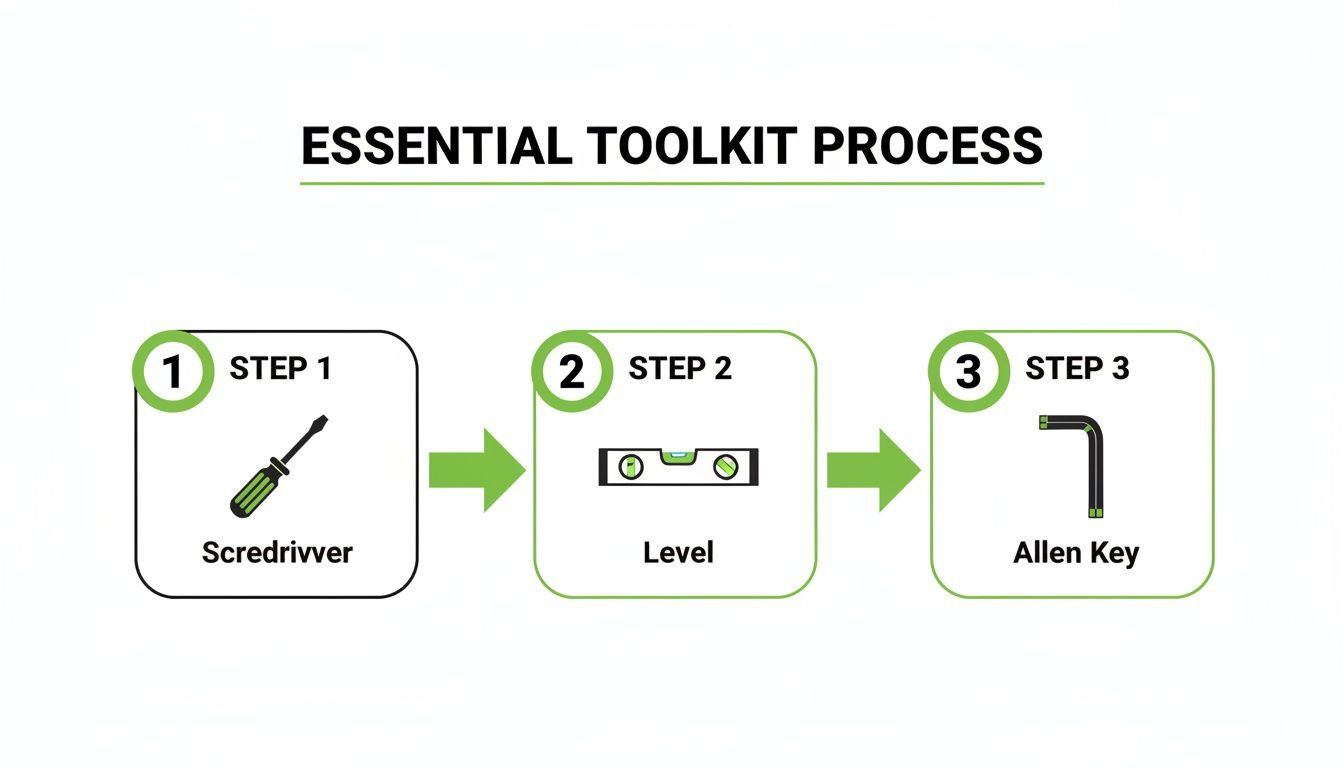
As you can see, a screwdriver, a spirit level, and an Allen key are pretty much all you'll need to get started.
Achieving The Perfect Seal and Lock
Once the door is level, give the rollers a quick spray of a decent silicone lubricant spray. This will help them run smoothly for months to come. Now, test it out. Slide the door back and forth – it should move effortlessly without any scraping or juddering sounds.
The final piece of the puzzle is making sure it locks properly. If the lock struggles to engage, it usually means the keep (the metal plate on the frame where the lock bolt goes) is slightly out of alignment. Simply loosen the screws holding the keep, shift it up or down just enough for the bolt to slide in smoothly, and then tighten the screws back up firmly.
Getting this right isn't just about convenience; it directly impacts your home's energy efficiency and security. With the UK's sliding patio door market holding a 21.5% share in Europe, these doors are incredibly common. However, problems are also common – a quarter of all installations need adjustment as the house settles.
A poorly adjusted door can leak up to 18% more air, which you'll definitely notice on your heating bills. On top of that, research shows 62% of uPVC door owners run into roller issues within five years. Considering a professional call-out can set you back £200-£500, learning to do it yourself is a skill that really pays off.
Adjusting French and Bi-Fold Patio Doors
While sliding doors have their own quirks, French and bi-fold doors bring a totally different set of challenges to the table. These doors operate on hinges and pivot points, so getting them to work perfectly requires a completely different approach.
French doors, with their classic swing-open style, have a tendency to sag over time. You’ll know this is happening when the leading edges of the doors start catching on the frame or dragging on the floor. This not only makes them a pain to close but also creates uneven gaps that let in annoying draughts.
Bi-folds, meanwhile, are a more intricate system of interconnected panels. When they fall out of alignment, the whole folding action can become clunky and stiff. In the worst cases, they can jam up entirely, refusing to stack neatly to one side like they're supposed to.
Mastering French Door Hinge Adjustments
The secret to fixing a misaligned French door almost always lies in its hinges. Most modern doors come fitted with 3D adjustable hinges, which are a real game-changer. They let you tweak the door’s position in three different dimensions, and all you usually need is an Allen key.
Look closely at each hinge, and you'll typically find three adjustment screws. Each one controls a specific movement:
- Vertical (Up/Down): This screw, often found at the top or bottom of the hinge, lifts or lowers the entire door. It's your go-to for fixing a door that has dropped and is scraping along the threshold.
- Horizontal (Left/Right): This one shifts the door closer to or further away from the hinge side of the frame. It's the key to getting that perfectly even gap all around the door.
- Compression (In/Out): This screw fine-tunes how tightly the door presses against the weather seals when it's shut. A small tweak here can make a massive difference to how well your door keeps the elements out.
A word of advice: when adjusting these hinges, always work in small increments. A simple quarter-turn of a screw can have a much bigger impact than you'd expect. Make a tiny adjustment, close the door to check the fit, and then repeat the process until it's just right.
The Nuances of Bi-Fold Door Alignment
Bi-fold doors run on a system of pivots and carriers that slide along a track. The key to a smooth folding action is making sure these components are perfectly aligned. For a closer look at how these systems work, you might find our guide to interior bifold doors useful.
Your main adjustment points are the top and bottom pivot pins and the roller guide that moves along the top track. If your doors aren’t closing flush or the panels are clashing as they fold, you’ll need to adjust these pivots to shift the entire stack of doors closer to or further from the frame.
These more complex door systems are becoming incredibly popular, especially in cities. London, for instance, holds a 25% market share and has seen a 37% growth in aluminium bi-fold systems for retrofits alone. But proper setup is absolutely crucial; misalignment can affect up to 35% of high-end units right after installation, with 9% needing a professional tune-up within the first year to keep them working correctly.
If you’ve tweaked the pivots and guides and the door still isn't running smoothly, or if one panel seems to have dropped dramatically, it could point to a more serious problem. At that point, it’s probably best to call in a specialist.
Knowing When to Call a Professional
Knowing your limits is probably the most valuable skill in any DIYer's toolkit. While you can tackle many patio door adjustments yourself, some problems are a clear signal to put the tools down and pick up the phone. Pushing on with a repair that’s beyond your experience can turn a fixable problem into a costly disaster.
Attempting to wrestle with major issues on your own can easily cause more damage to the door or its frame. More importantly, it can be downright dangerous. Patio doors are incredibly heavy and awkward; a door that's come completely off its track or has shattered glass is not a safe one-person job. These are the undeniable red flags telling you it’s time to step back.
For anything beyond the basic tweaks we've covered, it's vital to understand when to hire a professional for door repairs to get the job done safely and correctly.
Red Flags for a Professional Call-Out
Some symptoms are immediate signs that the problem is bigger than a simple adjustment. If you spot any of the following, your best and safest move is to get an expert on the line.
- Cracked or Shattered Glass: This is a major safety hazard. It requires a specialist to handle the broken glass and replace the entire sealed unit properly.
- A Severely Warped Frame: If the frame itself is twisted or bowed, no amount of fiddling with rollers or hinges will ever get you a good seal. This points to a deeper, often structural, issue.
- The Door Has Dropped Off Its Track: Don't even think about trying to lift a heavy sliding door back onto its track by yourself. It's a classic recipe for a back injury or worse.
In the UK, you can expect a professional call-out for a standard patio door repair—like replacing worn-out rollers or a faulty lock—to cost somewhere between £150 and £300. It might seem like a lot, but it’s a smart investment to stop a small problem from turning into a full replacement that could run into the thousands.
Your Patio Door Questions Answered
Got a nagging question about your patio doors? You're not alone. Here are some quick answers to the things we get asked most often.
How Often Should I Check My Patio Doors?
It’s a good habit to give them a quick once-over twice a year, usually as the seasons change in spring and autumn. You're just looking for the obvious stuff: debris clogging the tracks, any new squeaks or grinding sounds, and feeling for any noticeable draughts.
Most of the time, you’ll find they only need a proper adjustment every couple of years. But catching a small issue early stops it from becoming a big, expensive headache down the line.
What’s the Best Lubricant for Sliding Door Rollers?
Stick with a silicone-based spray. It’s the pro’s choice for a reason.
Oil-based lubricants, like the classic WD-40, are a magnet for dust and grit. They'll create a sticky sludge that gums up the rollers and track. A silicone spray, on the other hand, leaves a dry, slick film that keeps things gliding smoothly without attracting mess.
A dead giveaway that your door has dropped is when the lock suddenly becomes difficult to operate. The bolt is struggling to line up with the keep in the frame, which is a clear sign the door's height needs tweaking.
My Patio Door Is a Pain to Lock – Is It an Alignment Problem?
Almost definitely. That’s the number one symptom we see. When a door is hard to lock, it's because it has sagged or shifted, throwing the lock mechanism out of line with the frame.
Running through the steps to adjust the roller height will almost always sort this out. A few turns of a screwdriver can get that lock engaging perfectly again, making your door secure and effortless to use.
For everything you need to get the job done, from top-quality patio doors to the right tools and fixings, Burnt Oak Builders Merchants has you covered. Check out our full range online at https://www.burntoaktimber.com.